Click on an award to view this years nominations:
|
|
Coastal Adaptation Explorer
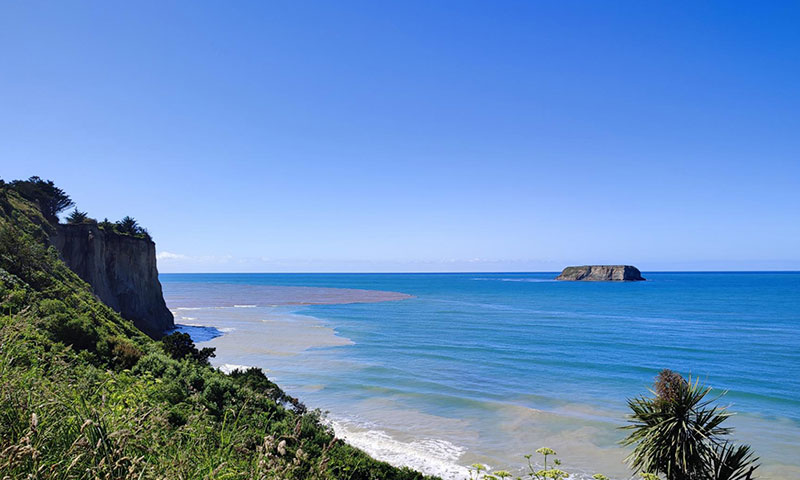
In 2020, the Hurunui District Council of New Zealand launched ‘Coastal Conversations’. 6 isolated coastal communities explored their future in the face of increasing coastal hazards over the next century.
Jacobs developed a web-based tool to explore their options for managing coastal hazards and determine how these options can mosaic together to form pathways. The tool is tailored to each settlement and includes options which would help mitigate the risk of impact of erosion and flooding.
The tool empowered each community to challenge the information presented and come up with their own options which were investigated further. As a result of these workshops, Hurunui District Council has drafted adaptation pathways for consultation with the community and will continue discussions about funding proposed options.
|
|
Rehabilitation and Modernisation of Guddu Barrage - River Training Works
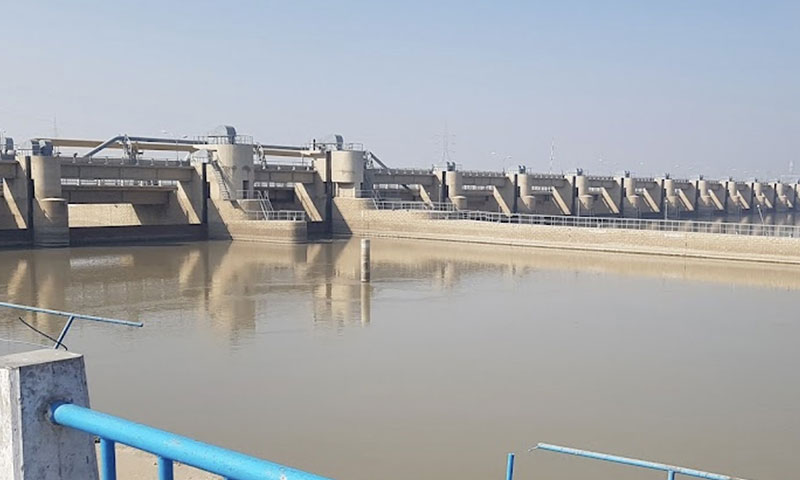
The Guddu Barrage on the River Indus in Pakistan feeds over 1.2 million hectares of irrigated land and has developed many safety issues since its commissioning in 1962. The river upstream of Guddu has continuously shifting loops occupying an active flood plain about 10-15km wide. There were catastrophic breaches during the 2010 floods in Pakistan, the majority due to piping failures and one due to overtopping.
The River Training Works stage of the broader Rehabilitation and Modernisation of Guddu Barrage project focused on improving the climate resilience of the upstream river embankments and finding long term solutions to asymmetric river flow to the barrage. As a result, the barrage was able to withstand the 2022 floods which tragically killed more than 1,700 people and caused 15 billion US Dollars' worth of damage.
The Emergency Preparedness plan was successfully used during the 2022 floods in Pakistan. It helped to highlight the interface between the local government response to floods in operating the barrage and local and community-based flood warning systems. It is an example for future flood planning within Pakistan.
The broader project will improve the operability of the barrage itself, including the replacement of more than 60 gates. This will result in over 2.6 million people benefitting from improved reliability of water supplies and reduction of flood vulnerability across more than 1.2 million hectares of irrigated land.
|
|
Prepare, Respond, Innovate - A Householder's Guide to Flood Resilience in Weymouth
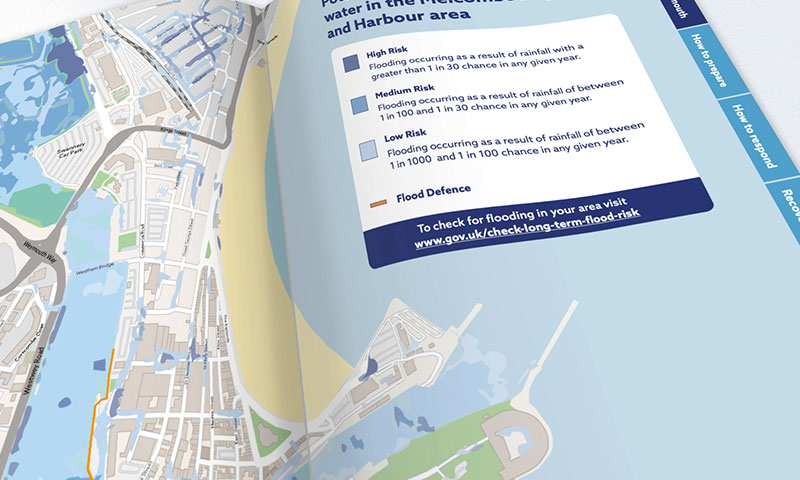
The Householder's Guide to Flood Resilience in Weymouth provides residents with a localised and easy-to-digest guide on how to prepare, respond to and recover from flooding. The guide is a simple booklet with important local information and links to existing resources. It also gives residents the opportunity to understand their flood risk and take the necessary actions to be more resilient to flooding. It provides links between the community and the relevant authorities, emergency services and volunteer groups.
The design process was inclusive, involving over 30 individuals from 11 organisations. The diversity, transience and deprivation levels of the community required a considered approach through extensive partnership working and community participation.
A significant point identified during consultation was that many residents live in rented accommodation or do not have much disposable income to spend on flood protection. The guide details how to sign up for free flood warnings, and how Property Flood Resilience measures can be accessed for renters as well as homeowners.
The guide can easily be adapted to different communities and has already received interest from multiple areas across England. Innovation, inclusion, and collaboration were at the heart of this project.
|
Back to top
|
|
|
Cambridgeshire County Council's Community Flood Action Programme
In 2022, the Cambridgeshire Community Flood Action Programme delivered various workstreams to enhance community understanding of flood risk and improve their resilience to flooding in the future. The programme was established following widespread flooding in Cambridgeshire in December 2020 during which more than 250 properties were flooded. After the flooding, residents said that they were confused about what they needed to do to maintain watercourses and which organisations to go to for help.
Grants were offered to community groups who were willing to undertake, or commission work themselves where they could demonstrate that it would address a recognised flooding issue. The funding supported many community-led initiatives such as a postal campaign to tackle the ongoing issue of-fly tipping. In return, the town council committed to the ongoing maintenance of the watercourse and trash screen. The overall result of all this is a reduced risk of surface water flooding, improved aesthetics and a reduction in anti-social behaviour.
One flood group member, who is a retired science teacher, volunteered to run a practical science class for the local primary school on the importance of brook maintenance. In total, the Flood Action Programme has issued grants to eight community groups and hopes for more applications in 2023.
|
|
Mainstreaming Property Flood Resilience in Solihull
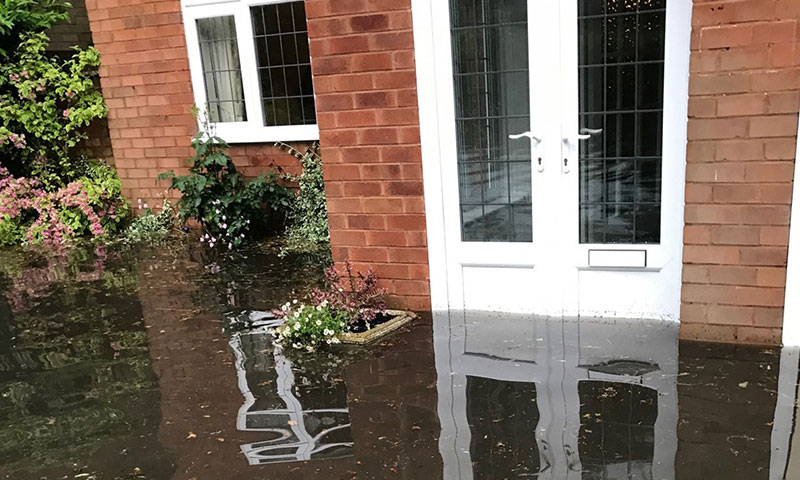
Following major surface water floods in 2015, 2018 and 2021, Solihull Metropolitan Borough Council’s leadership engaged and empowered the Solihull community towards taking responsibility for individual property flood risk.
Residents are no longer solely resisting the impacts of flooding, they now act to be sustainably resilient to flooding and protect their properties, their community and each other. Resistance measures, recoverability and preparedness have been embedded in the Solihull community. They also encourage wider benefits, for example the Dorridge District Residents Association set up a flood group and is planting 372 trees for a local charity.
Cameras and level sensors were installed on key locations and the council worked with partners to develop a flood alert system achieving long-term benefits by identifying opportunities to develop resilience and preparedness measures.
Mainstreaming property flood resilience in Solihull means working together. They demonstrate an effective, flexible and innovative approach involving the risk management authorities and the community.
|
|
Climate Resilient Schools in London
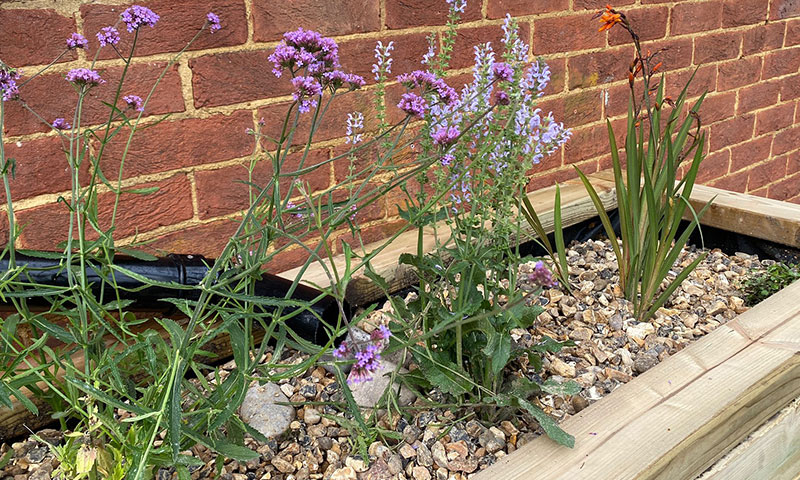
The Climate Resilient Schools in London programme is targeting the schools in London that are most vulnerable to the impacts of climate change. The £1.5million programme has prioritised the top 10 per cent of schools with the highest surface-water flood risk.
Using sustainable drainage approaches to adapt schools to climate impacts not only reduces risk, but it also enables normal life to resume sooner. They also enhance biodiversity while providing educational opportunities for students.
This innovative project brings the Department for Education’s Climate Change Strategy and the Environment Agency’s Flood and Coastal Erosion Risk Management Strategy for England to life. Partnership funding necessitated sharing of data and business planning, and the project supported achievement of each other’s organisational goals. The approach is scalable and transferable to other schools, locations or different types of sites and there is already interest to adopt elsewhere.
|
Back to top
|
|
|
The Marches Mosses BogLIFE project
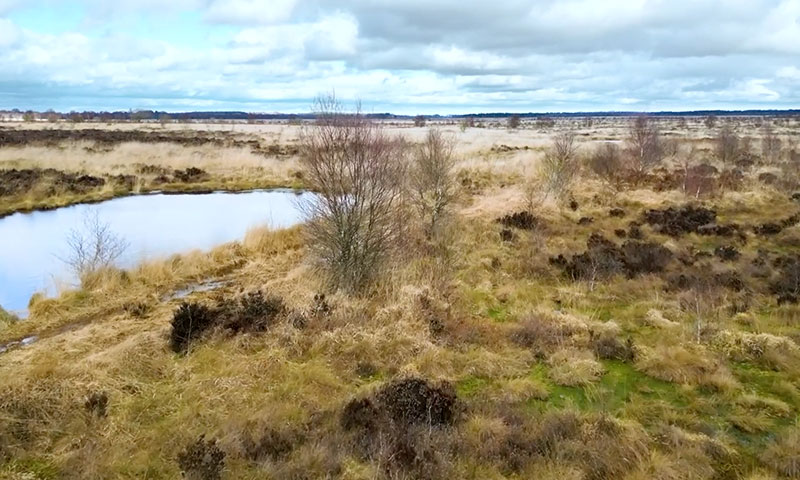
The ‘Marches Mosses’ include a Special Area of Conservation and straddles the English Welsh border. It is the largest peat bog in this region and the third largest of its type in the UK. The project is a collection of 3 separate schemes that are protecting the region’s largest natural carbon store. The project is funded by the EU LIFE programme and National Heritage Lottery fund. WSP, Shropshire Wildlife, Natural Resources Wales and Natural England, along with volunteer groups wanted to restore the area as a site for ecological enhancement, public enjoyment and will create significant social value as a resource for local learning and leisure.
Drainage works for other infrastructure in the region led to the significant dewatering of this peat bog. Coupled with a marked increase in commercial peat extraction in the late 1980’s meant that the area of European Special Conservation interest was severely damaged which put at risk a very delicate habitat for wildlife.
The project team needed to consider reprofiling of drainage ditches, design and excavation of new wetland ponds, public amenity car parking and wildlife hides and new drainage works such as pipework and headwalls.
Restoration of natural assets helps manage flooding locally and regionally in a much more nature positive way.
|
|
Promoting Adaptation to Changing Coasts
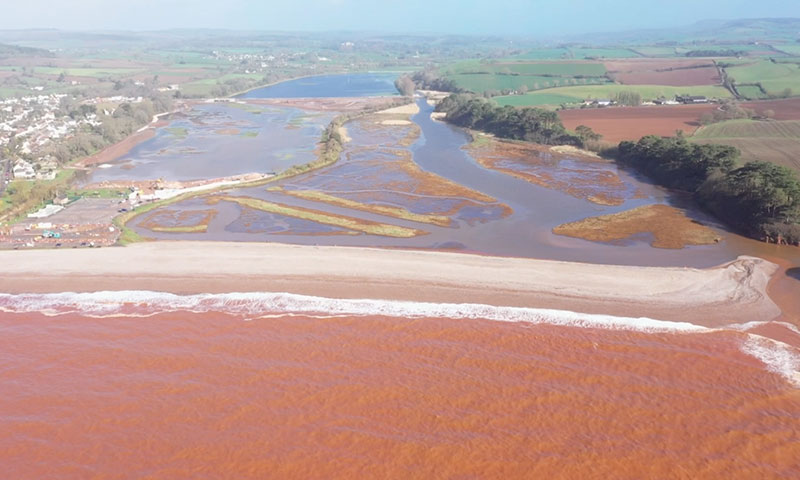
The Promoting Adaptation to Changing Coasts (PACCo) project is a £27 million EU Interreg funded, cross-border project that delivers climate adaptation projects in two estuaries: The Lower Otter Valley in East Devon, England and Saane Valley in Normandy France.
Sea level rise and climate change were affecting communities and wildlife in both areas and disconnecting the rivers from the floodplains, resulting in lost ecologically inter-tidal habitat. Together the two sites present an opportunity to create a model for sustainable management of coastal and estuarine areas that can be replicated by others.
Working with 3 English and 4 French stakeholders with shared environmental challenges, it was the first European adaptation project of this scale. The initiative is recreating 100 hectares of inter-tidal and wetland habitat, enhancing ecosystem services and bringing socio-economic benefits to the two focus sites.
New replacement defences for the rivers Saâne and Otter, sized to cope with climate change, would cost at least €20m at today’s prices. The value of increased tourism is estimated to cause a 10% uplift in the economy over the project life. Increased ecosystem services, including carbon storage, are estimated to have a value over the next 50 years of €5.45m.
The project has been able to deliver benefits for people and environment by adapting to climate change, improving infrastructure resilience and reducing flooding whilst increasing biodiversity and carbon capture.
|
|
Smart Sensor Integration Drainage Project
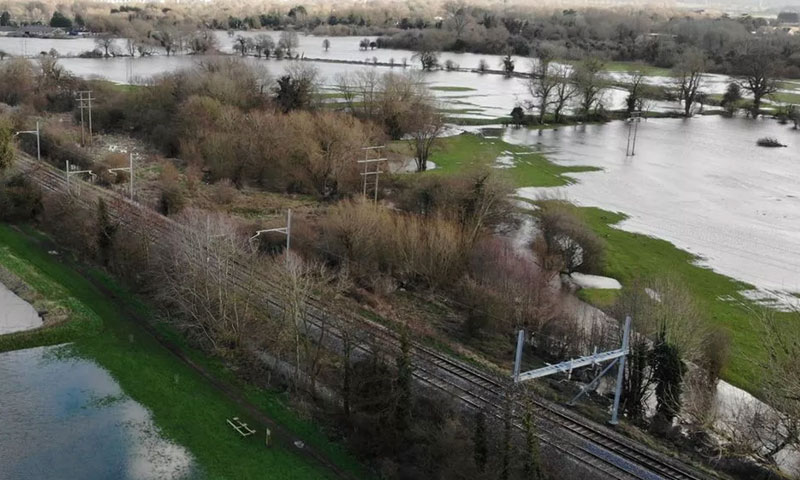
In February 2020, Storm Dennis led to widespread flooding across the borough of Wokingham that caused damage to property and the transport network. Short in duration and high in intensity, the storm was typical of the type of weather event that has become more frequent in the UK as a result of climate change.
Having declared a Climate Emergency, Wokingham Borough Council remains committed to mitigating the effects of climate change, including flood risk. Using innovative green technologies to better manage and monitor the drainage system within the borough allows the council to be better informed about locations where they can carry out maintenance work. This saves costs and time by reacting quickly to solve issues and reduce disruption on the roads.
Using ultrasonic sensors can monitor conditions in real-time in high flood risk areas. These sensors and data concentrators were installed and trialed at key locations in Arborfield during 2021. The trial outcomes show that during this period the smart drainage system alerted the contractor of potential flooding incidents allowing the contractor to proactively empty the right drain at the right time, preventing flooding.
The one-year trial has shown the effectiveness of this technology to reduce maintenance costs by 80% while mitigating flood risk and roads disruption.
|
Back to top
|
|
|
Developing ultra-low carbon reinforced precast concrete for use on Environment Agency flood and coast projects
The account of how a team of companies led by Jackson Civil Engineering developed an ultra-low-carbon pre-cast reinforced concrete is a story of construction…and before that deconstruction.
Bringing together the best of supply chain partners and using innovative materials has been central in the development of a ground-breaking ultra-low carbon, pre-cast, reinforced concrete that results in a carbon dioxide saving of up to 88%.
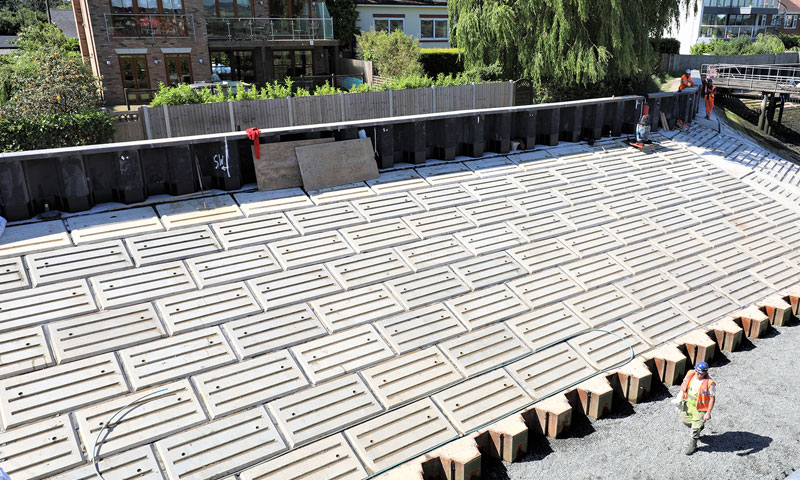
The first product to be developed using this trailblazing material is Canewdon blocks. The blocks are positioned on riversides and coastal revetments to dissipate the energy in waves to reduce coastal erosion. The combination of low carbon elements that is cement free concrete, basalt rebar and carbon negative aggregate - is not just reserved for the production of Canewdon blocks. It can be applied to any reinforced pre-cast concrete product required on a project such as reinforced culvert pipes or sections.
The innovation doesn’t stop here - we are looking at new designs of Canewdon blocks that require less concrete to manufacture. Traditionally, Canewdon blocks using steel rebar have had to be a certain thickness to protect the steel from rust and erosion. Using basalt rebar, we believe there is a possibility the products won’t require this degree of protection, bringing down the embodied carbon per unit even further.
|

|
Rivercraft: the Minecraft games changing FCRM Engagement
Rivercraft is a suite of games developed by the Environment Agency, Microsoft and Blockbuilders to engage 11 to 14 year olds on flood risk reduction, climate change and biodiversity.
The scheme is based on the £54.7 million flood risk scheme in Preston and South Ribble which will reduce flood risk to 4,700 homes. The game shows how communities are impacted, and users are committed to making a better world through the power of play.
Released in April 2022 on the Minecraft Education Platform to 2 million schools in 112 countries. The program is complemented with teaching material in 27 different languages and has reached 3.8 million views on social and traditional media since the launch.
The project has been an innovative and pioneering engagement approach to the next generation about how we communicate and increase knowledge about the importance of flood risk resilience, and the impacts of climate change, along with introducing a range of careers that use environmental skills.
Following the success of the games, the team have developed further digital content expanding the educational reach to natural flood risk management, drought and sustainable urban drainage.
|
|
Monitoring asset performance
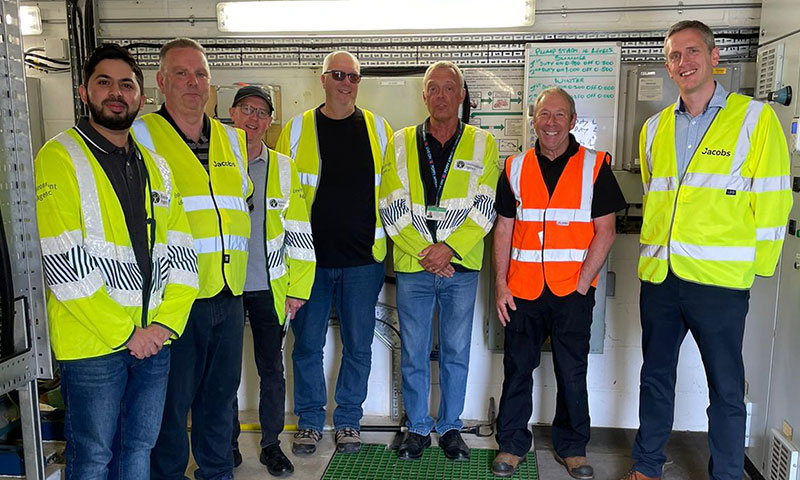
The Environment Agency, supported by Jacobs, piloted a condition-based maintenance system at 2 of its flood pumping stations. This required close collaboration between Jacobs, the Environment Agency, Defra and contractors IFM Sensors and Faraday Predictive.
This research and development project implemented all phases of the condition-based maintenance system, from selection and installation of sensors, through to deployment of the cloud analytical architecture. The sensors can monitor aspects such as vibration, air quality, flow, pump control and river quality.
The system identified 2 cases of deteriorating asset health, signposted by exceeding threshold vibration levels and changes in trends. The first case led to the discovery and removal of a wooden obstruction. The second instance involved observing a pump’s gradual decline in health, where the system was validated by the asset eventually needing to be replaced due to failure. In this case, the system generated an alarm five months before the pump eventually failed.
|
Back to top
|
|
|
Franz Schweighart Gate
Franz is an engineer with a passion for flood and coastal erosion risk management and the environment. He challenges the accepted while driving sustainable solutions on complex projects.
As a project manager Franz is leading one of the Thames Barrier’s most critical projects to ensure that 1.25 million people and £1.1 billion of property and infrastructure are protected up to 2070.
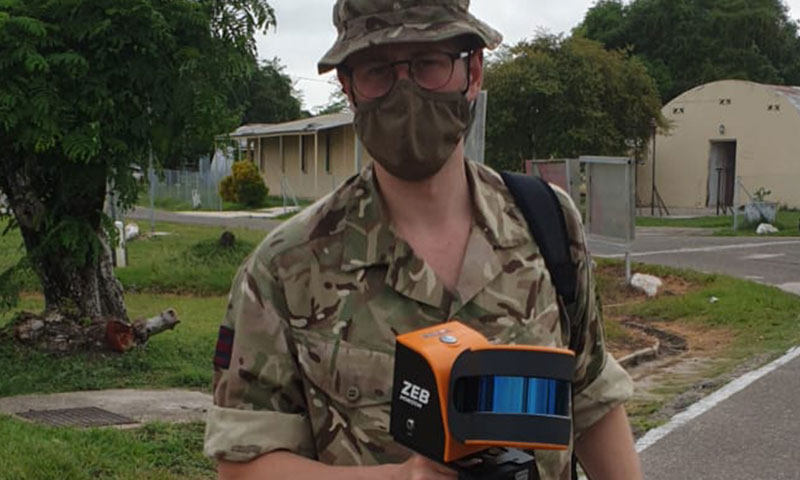
Serving as a British Army Reserve Officer, he is providing water infrastructure support to the Ministry of Defence. When leading a review of the climate resilience of Price Barracks, Belize, he engaged local stakeholders and used an innovative approach to assess flood risk without access to flood mapping.
Franz volunteers for the charity Engineers for Overseas Development, where he is improving the resilience of the water supply to a hospital in Uganda. The current supply from a lake lacks resilience and is vulnerable to seasonal water level variation, exacerbated by climate change. He is working to raise pumps above the flood level, whilst simultaneously developing a longer-term solution.
|
|
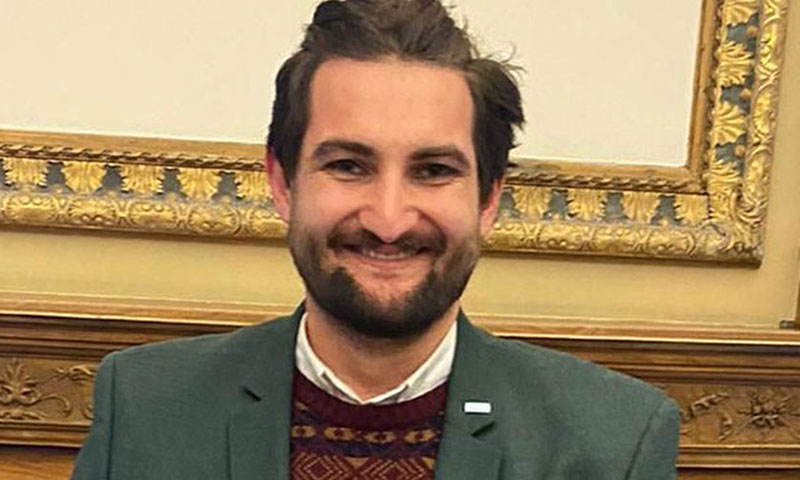
Leonard (Leo) Connolly
Leo is in year 4 of an Environmental Practitioner BSc qualification and is currently working in the Environment Agency’s asset management programme to refurbish and replace tidal flood defences in the Thames estuary.
When Leo joined Balfour Beatty he became a member of their LGBT+ Affinity Network wanting to make a difference for the LGBT+ community in the construction sector. He has presented talks in the workplace to all levels of the business, driving inclusion and recently has become co-chair of the network.
As an ardent environmentalist, Leo previously volunteered his time in maritime conservation, protecting the world’s most endangered marine mammal, – the Vaquita Porpoise in The Sea of Cortez, Mexico, with a reported population of less than 20 left in the wild.
With a strong conviction, Leo is always on the front line to push for innovation, supporting good ideas and encouraging projects to pursue sustainability practices that work for them. He has demonstrated that sustainability requires a bespoke touch and constant information sharing, to succeed. He pushes to trial new innovative ideas and demands low carbon alternatives from designers.
|
|
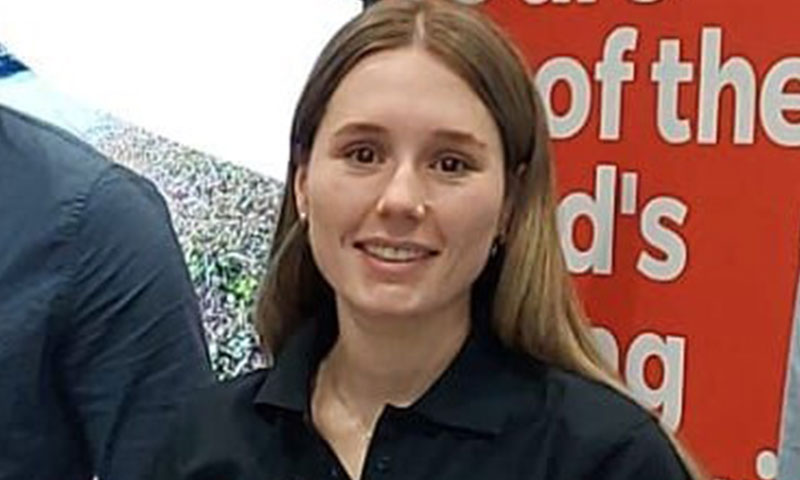
Phoebe Clayson-Lavelle
Phoebe is a member of the Neurodiversity group at WSP and in December 2022 set up a monthly support call to provide a safe space for Neurodiverse colleagues to meet each other and talk openly about their experiences. Though this group is still in its infancy, it has already generated great enthusiasm and Phoebe has seen the benefit it provides firsthand.
In 2022 Phoebe chaired a panel event in celebration of International Women in Engineering Day. She invited four engineers from different sectors to talk about their experiences and to discuss the challenges the industry faces today. Her passion for inclusion led to her taking on the position of Women in Water Champion in April 2022, where she has been able to bring her passion for inclusion and diversity directly into her team.
In 2021, Phoebe designed an educational session using Minecraft as part a Stem engagement project run by University of West England. The project is targeted at marginalised groups and uses gaming software to promote engineering in a fun and accessible way. She is now to be the lead engineer on their upcoming Stem programme which focusses on sustainable engineering solutions for future communities.
|
Back to top
|
|
|
|
The Women in Flood and Coastal Erosion Risk Management Awards will be announced at the Flood & Coast Gala Dinner. The awards celebrate professionals of all genders and organisations in the sector, who make a real difference to gender equality in the workplace and across the industry.
This year’s categories are:
- An individual who has made a difference in their own organisation, who has proactively influenced and promoted gender equity
-
An individual who has made a difference across the FCERM sector, who has proactively influenced and promoted gender equity
Our judges have looked for individuals demonstrating the following behaviours:
Leadership of gender equality, influenced change and promoted a culture of fairness, inclusion and respect
- demonstrated the highest degree of leadership, innovation and excellence in true gender equality, so everybody has the same opportunities on all aspects of work and career in a way that benefits all.
- acted as a positive role model and demonstrated a great desire to bring more diversity to their workplace or sector
- made an outstanding contribution to promoting a culture of fairness, inclusion and respect in their workplace or beyond
Developing and empowering self and others
- proactively helped develop self and others, provided the resources for guidance, time and advice in a motivational way and shined a light on the great things women can achieve
- acted as a positive role model and empowers others to feel able to ‘be themselves’
More information can be found at
www.womeninfcerm.org/awards.
|
Back to top
|
|
|

